Arts Quincy
  • Home
    • About Us >
      • Our Founder
    • Mission/Vision Statement
    • Now Hiring!
    • Frequently Asked Questions
    • Staff & Board
    • Contact
    • Privacy Policy
  • Programs
    • Arts-in-Education
    • Instant Arts Classroom Grants >
      • SPONSOR A CLASSROOM
    • Partner Orgs >
      • Info for Partner Orgs
      • Arts Dollars
    • Public Art >
      • Sculpture Series >
        • Quincy Senior High School
        • Thomas S. Baldwin Elementary School
        • Quincy Junior High School
        • Quincy Notre Dame High School
        • Lincoln-Douglas Elementary School
        • Sarah Atwater Denman Elementary
        • Dr. Abbey Fox Rooney Elementary School
        • Col. George J. Iles Elementary School
      • Call for Artists
  • Magazine
    • AQ Magazine FAQ
    • Current AQ Magazine
    • Blog
    • Community Arts Directory
  • Calendar of Events
    • Club Meetings
    • Museums
    • Arts Blast Email
  • Support Us
    • Become a Member
    • Become a Sustaining Member
    • Become a Business Member
    • Make a Donation
  • Full STEAM Ahead

Blog

Design A Paper Circuit Card

8/28/2020

0 Comments

 
Picture
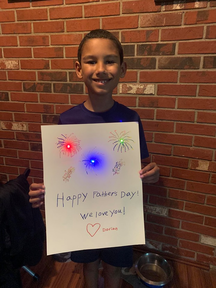
​This week’s STEAM Star is Dorian Maglioccowho will be a fourth grader at Lincoln-Douglas Elementary School. Doriancreated a paper circuit Father’s Day card that incorporates science, technology, and art. Thank you Dorian for creating this fun activity for us!
​
How does an electrical circuit work?Electricity can be found everywhere you look. Electrical circuits are used to power light bulbs, televisions, computers, and more! Circuits are a simple, fascinating way to better understand building and engineering. To create a simple circuit, you will need a battery, wire, and a light. 

 For this project, you will be using a three-volt lithium button battery. This battery should have the positive and negative sides clearly labeled. You will also be using 5mm LEDs (or Christmas lights) that will each have two pins. The slightly longer pin is the positive end and the slightly shorter pin is the negative end. To ensure that the LED will light-up, the negative end of the battery must be connected to the negative end of the LED and the positive end of the battery must be connected to the positive end of the LED. This allows for the electrons to flow properly throughout your circuit from the battery to the light.

Material List:
Card stock paper, markers, and craft supplies
Copper wire*
Scissors
3v lithium button battery
​5mm LEDs of assorted colors

​Instructions:
1. Before constructing your circuit, test your 5mm LED to ensure that it works. Place the negative LED pin on the negative end of the 3v lithium button battery and the positive LED pin on the positive end of the battery. If the LED lights up, you are ready to move forward with building your closed circuit. If your LED does not light up, test other LEDs and batteries until your LED lights up.
2. Once your LED is lighting up, design your card using markers, stickers, paint, glitter, and more. Be creative with your card! Your lights could be the candle on a birthday cake, stars in the sky or even provide the sparkle to a light saber or magic wand! Dorian created fireworks with his lights, which are a fun theme for Father’s Day, the 4th of July and more!
3. Now it’s time to get building. Cut and place two copper wires of equal length on the card stock in a path of your choosing.
4. Connect each LED pin to one wire. Do not allow the two LED pins to touch each other once they are connected or else the light may get short-circuited. This means that heat energy is released and causes damage to the circuit or overheating.
5. Place your button battery on the opposite end of the wires. Then attach it to the wires, making sure the positive end of the LED flows to the positive end of the battery and the negative end of the LED flows to the negative end of the battery.This connection closes the circuit and allows for the LED to light up. The button battery provides power and energy to the circuit which causes the electrons to flow. This is an example of a simple circuit, meaning that the light has a direct connection to the battery.
0 Comments


Leave a Reply.

    Archives

    September 2025
    June 2025
    April 2025
    February 2025
    January 2025
    December 2024
    November 2024
    September 2024
    August 2024
    July 2024
    June 2024
    May 2024
    April 2024
    March 2024
    February 2024
    January 2024
    December 2023
    November 2023
    October 2023
    September 2023
    August 2023
    July 2023
    June 2023
    May 2023
    March 2023
    May 2022
    February 2022
    January 2022
    September 2021
    June 2021
    May 2021
    April 2021
    March 2021
    February 2021
    January 2021
    December 2020
    November 2020
    September 2020
    August 2020
    July 2020
    June 2020
    May 2020
    April 2020
    March 2020
    January 2020
    December 2019
    October 2019
    August 2019
    July 2019
    June 2019

    Categories

    All
    STEAM Stars

    RSS Feed

217-222-3432
office@artsquincy.org
Picture

© Quincy Society of Fine Arts. All rights reserved.
  • Home
    • About Us >
      • Our Founder
    • Mission/Vision Statement
    • Now Hiring!
    • Frequently Asked Questions
    • Staff & Board
    • Contact
    • Privacy Policy
  • Programs
    • Arts-in-Education
    • Instant Arts Classroom Grants >
      • SPONSOR A CLASSROOM
    • Partner Orgs >
      • Info for Partner Orgs
      • Arts Dollars
    • Public Art >
      • Sculpture Series >
        • Quincy Senior High School
        • Thomas S. Baldwin Elementary School
        • Quincy Junior High School
        • Quincy Notre Dame High School
        • Lincoln-Douglas Elementary School
        • Sarah Atwater Denman Elementary
        • Dr. Abbey Fox Rooney Elementary School
        • Col. George J. Iles Elementary School
      • Call for Artists
  • Magazine
    • AQ Magazine FAQ
    • Current AQ Magazine
    • Blog
    • Community Arts Directory
  • Calendar of Events
    • Club Meetings
    • Museums
    • Arts Blast Email
  • Support Us
    • Become a Member
    • Become a Sustaining Member
    • Become a Business Member
    • Make a Donation
  • Full STEAM Ahead